An addressable LED strip controller with Wi-Fi, a free app and ears
AudioReactive is a Wi-Fi LED controller for addressable pixel strips, rings and matrices. Plug in a WS2812B, SK6812 RGBW or WS2811 strip, open the free app in your phone browser, and pick from 418 modes, every one of which can follow the music through the built-in microphone.
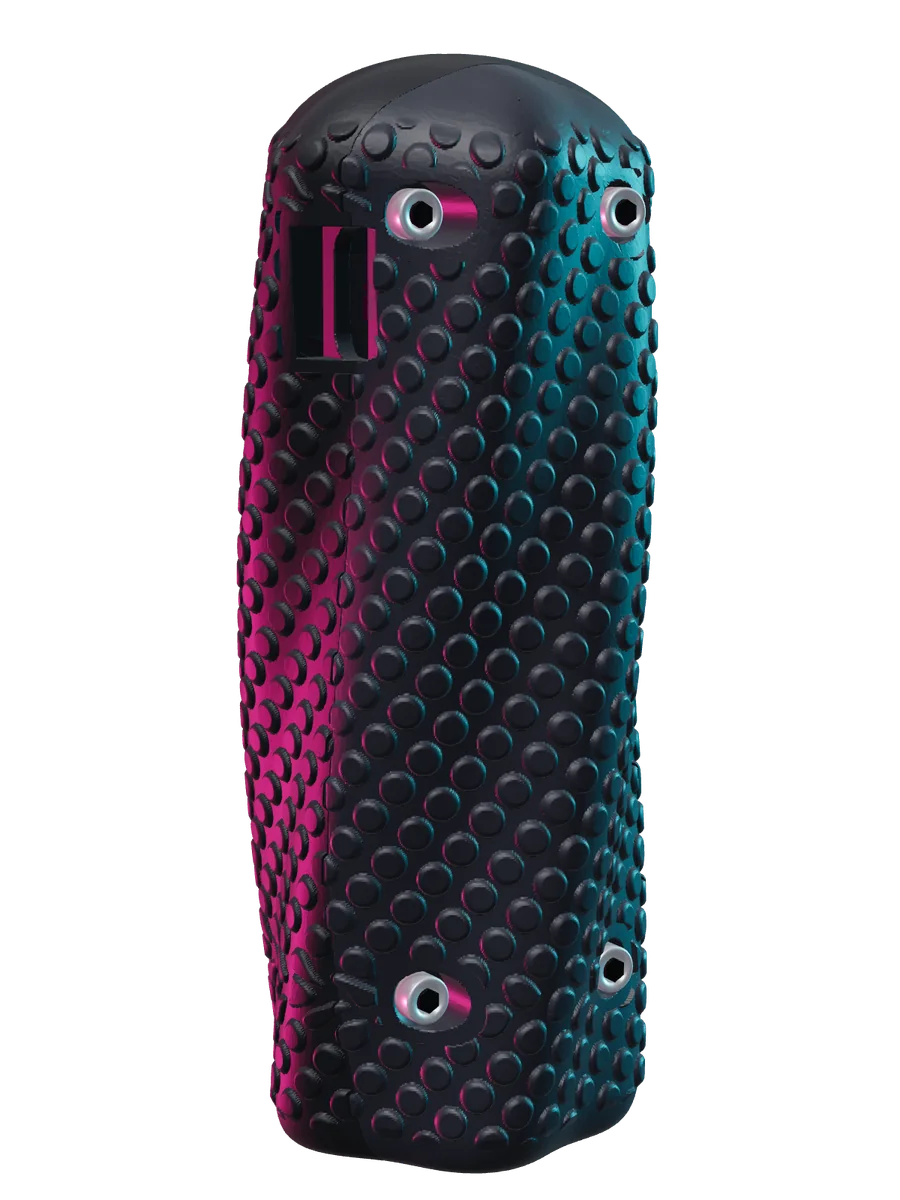
Which LED strips it controls
It is an addressable (pixel) LED controller: each LED gets its own colour over a data wire.
- WS2812B, WS2813, WS2815, SK6812 (RGB and RGBW) and WS2811 strips, strings and rings
- 16×16 and other LED matrices, with 2D modes that draw across them
- JST PH 2.0 3-pin socket: 5 V, data, ground. Kit strips plug straight in
Plain 4-wire RGB or RGBW strips (+12V, R, G, B) are a different kind and need a PWM controller. Not sure which you have? The wiring guide shows how to tell.
A free app, with nothing to install
The app lives on the controller. Join its Wi-Fi hotspot, or put it on your home Wi-Fi and open anima.local, in any phone or laptop browser. No account, no download, no subscription.
- Modes: 418 of them, each shown as a live preview before you pick it
- Live: play the lights like an instrument with pads and faders
- Setup: LED count, colour order, matrix size, power limit, schedules
- The button on the shell works without a phone: press for the next preset, hold for on and off
Smart, and on your network
- Wi-Fi LED controller: works on its own hotspot or your home 2.4 GHz network
- WLED compatible: the WLED app and Home Assistant see it as a WLED light
- MQTT with Home Assistant discovery, schedules and presets
- Art-Net, sACN and DDP for xLights, MADRIX and Resolume: see the Art-Net LED controller page
A music controller that actually hears the music
Most LED music controllers flash with the volume. This one finds the beat and tempo, the chords and key, the melody, and the build-ups and drops, from its own microphone, about 43 times a second. Any mode can follow any of them. How it compares.
Connecting it
Kit strips: plug in, switch on, play music. Your own strip: match ground and data, give long or 12 V strips their own power supply, and set the LED count in Setup. Step by step in How to connect an LED controller to LED strip lights.
How it compares
| Feature | Typical Bluetooth / IR strip controller | AudioReactive |
|---|---|---|
| LEDs | Plain RGB or its own pixel strip | Any WS2812B, SK6812 RGBW, WS2811 strip or matrix |
| App | Phone app download, often with an account | Free, in the browser, served by the controller |
| Wi-Fi and smart home | Rarely | Wi-Fi, WLED app, Home Assistant, MQTT |
| Music | Phone mic or volume flashes | Built-in mic: beat, chords, melody, drops |
| Pro control | No | Art-Net, sACN, DDP, OSC |
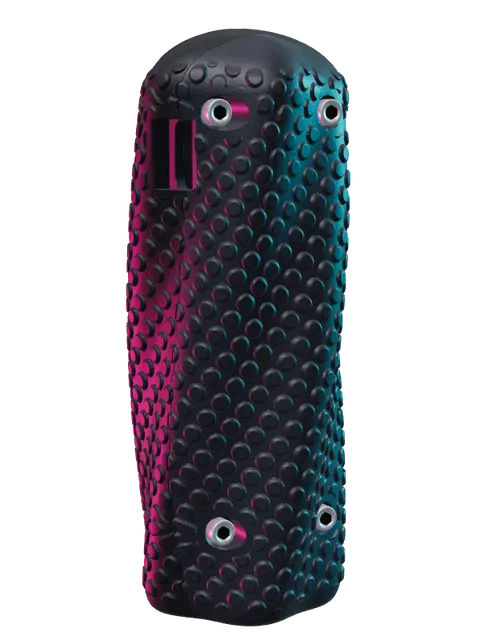 Seed Pod
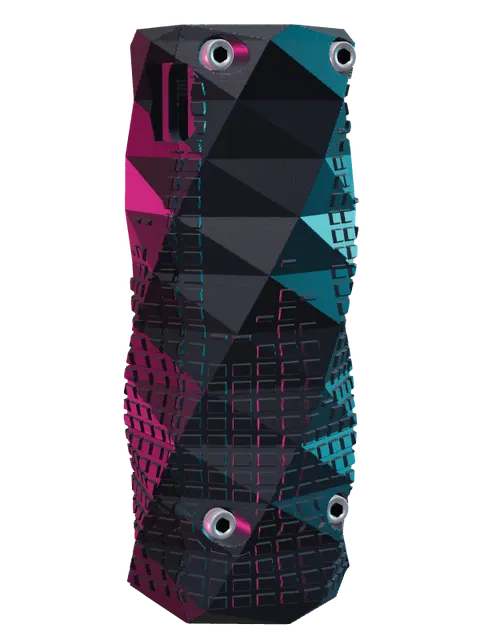 Faceted Twist
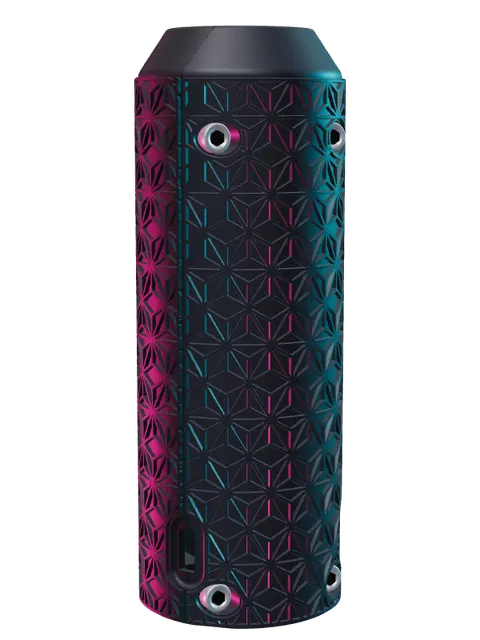 Round
Questions
Can any LED controller work with any LED strip?
No. Plain RGB and RGBW strips (4 or 5 wires, usually 12 V) need a PWM controller that dims each colour. Addressable pixel strips (3 wires: power, data, ground) need a data controller like this one. It drives WS2812B, WS2813, WS2815, SK6812 RGB and RGBW, and WS2811, not plain 4-wire RGB strips.
How do I connect the controller to my LED lights?
Kit strips plug straight into the 3-pin socket. For your own strip, connect ground to ground and the strip's input (DIN) to data, and give long or 12 V strips their own power supply with the grounds joined. The wiring guide has the steps.
Is the LED controller app free?
Yes. The app is served by the controller itself, so there is nothing to install or pay for and no account: join its Wi-Fi hotspot or your home network and open it in any phone browser. The WLED app and Home Assistant work too.
Does it need Wi-Fi?
No. It makes its own hotspot for the app, and reacts to music with no network at all. Join it to your home Wi-Fi to use anima.local, Home Assistant, WLED sync or Art-Net.
Does it work with RGBW strips?
Yes, SK6812 RGBW addressable strips, with the white channel used for clean whites and pastels. Plain 4-wire analog RGBW strips need a different, PWM controller.
Can it run an LED matrix?
Yes. Kits come with a 16×16 matrix, and any WS2812B or SK6812 matrix works once you set its size in Setup, so 2D modes draw across it.
How many LEDs can it run?
Kit strips and matrices run from the controller as they are. For longer strips, power the strip from its own supply and connect data and ground, and set the power limit in the app to your supply's rating.
More in the support guides, or ask us.